SodaSlim Review 2026

I Tried It For 8 Weeks And Wasn't Prepared For What Wednesday Felt Like
Methodology | Fact Checked by Amelia Harper Published on September 17, 2026 | Updated on September 17, 2026
For three years, every diet I started on Monday was dead by Wednesday. Not because I lacked discipline — because by 2 p.m. I had nothing left to be disciplined with. I’d tried fasting, green tea pills, fiber, and willpower. Then a friend mentioned SodaSlim, and I checked the label instead of the sales page. This is my honest SodaSlim review, all 56 days of it.
I Tried It For 8 Weeks And Wasn't Prepared For What Wednesday Felt Like

Methodology | Fact Checked by Amelia Harper Published on September 17, 2026 | Updated on September 17, 2026
For three years, every diet I started on Monday was dead by Wednesday. Not because I lacked discipline — because by 2 p.m. I had nothing left to be disciplined with. I’d tried fasting, green tea pills, fiber, and willpower. Then a friend mentioned SodaSlim, and I checked the label instead of the sales page. This is my honest SodaSlim review, all 56 days of it.
The Problem That Was Getting Hard to Ignore
About Me
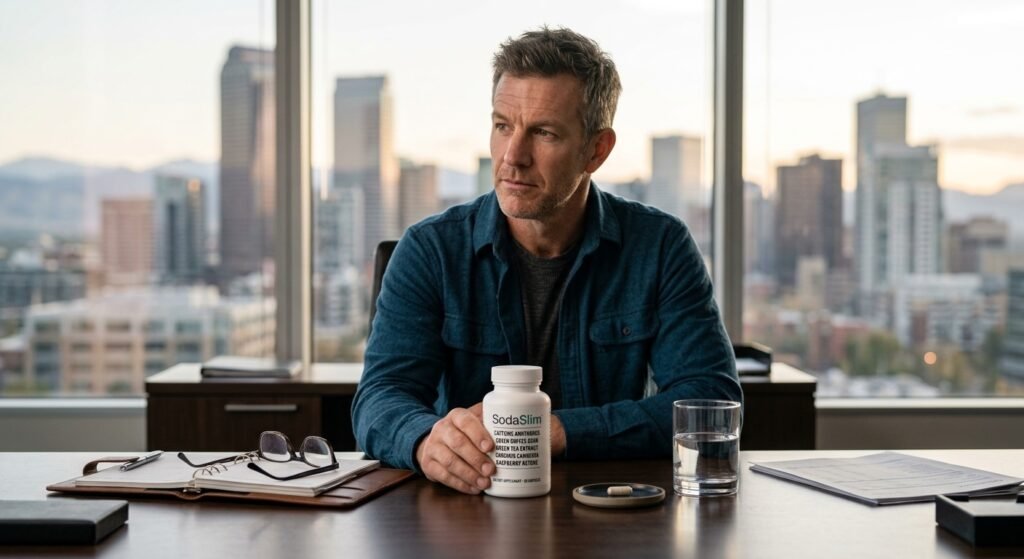
I’m David Whitfield, 45, a senior accountant in Denver, Colorado. Tax season and month-end closes keep me at a desk for ten-hour stretches, and most weeks my main form of exercise is the walk to the break room and back.
I have a wife, two teenagers, and a genuinely bad habit: whatever pastry is left in the office kitchen at 10 a.m. becomes mine.
I wasn’t chasing a transformation. I wanted to stop losing the same fight every single afternoon.
The weight around my midsection was never just a vanity problem. It showed up in how my shirts sat, in which social invitations I quietly declined, and most of all in the 2 p.m. collapse — right when I needed to be sharp for client calls.
But the part that actually wore me down was the pattern.
Monday: perfect. Tuesday: fine. Wednesday: gone.
Not a dramatic failure. I’d just get to mid-afternoon with no energy, and the vending machine would stop being a decision and start being an outcome. Three years of that cycle had taught me something worse than any number on the scale: I’d started believing I simply couldn’t stick to things.
I didn’t need another program demanding hours I didn’t have. I needed something to bridge the gap between what I intended at 8 a.m. and what I had left at 2 p.m.
What I Tried First (And Why None of It Worked)
Intermittent fasting. Six weeks. The hunger made me irritable and useless in morning meetings. The eating window did not survive an actual accounting calendar.
Generic green tea extract from the pharmacy. A mild lift that was gone by 11 a.m. Nothing at all where I needed it.
A basic fiber supplement. Fullness for about an hour. Zero effect on cravings.
Cutting sugar entirely. Lasted nine days. Made the Wednesday crash worse, not better.
Just trying harder. The most expensive one, because it cost me the belief that any of it was possible.
Here’s what I eventually noticed, and it took me embarrassingly long. Every one of those attempts attacked the food. Not one of them touched the reason I reached for it — which was that by mid-afternoon I was running on empty and my body was asking for the fastest available fuel.
I was fighting the symptom. Every time.
How I Came to Know About SodaSlim
My colleague Marcus mentioned it over lunch. He’d been taking it a couple of months and said his afternoon energy and cravings had both changed — and he was clear it was his experience, not a promise.
Normally that’s where it ends. I’d been burned enough. But one thing he said stuck: “It’s not an appetite blocker. It works on energy first, and the cravings follow.”
That reframed the whole thing for me. My cravings were never really hunger — I wasn’t reaching for pastries because my stomach was empty, I was reaching because I was depleted at a predictable hour. A pill that suppressed hunger was solving a problem I didn’t have.
So over the next few days I read the label properly, compared the formula against what I’d already failed with, and checked the refund terms before deciding it was worth $207 of my own money to test.
Why I Decided to Try It
Beyond Marcus, specific details pushed me to order:
- Every ingredient listed by name — caffeine anhydrous, green coffee bean, green tea, garcinia, raspberry ketone. No vague “proprietary thermogenic matrix.”
- A formula that pairs energy with appetite support, rather than doing only one.
- One capsule daily, in the morning. Nothing to remember at 3 p.m., which is exactly when I forget things.
- A 60-day money-back guarantee.
- A one-time purchase — no subscription, no auto-renewal.
- Made in a GMP-certified U.S. facility, per the brand’s information.
- Free U.S. shipping on the three- and six-bottle options.
What Is SodaSlim?
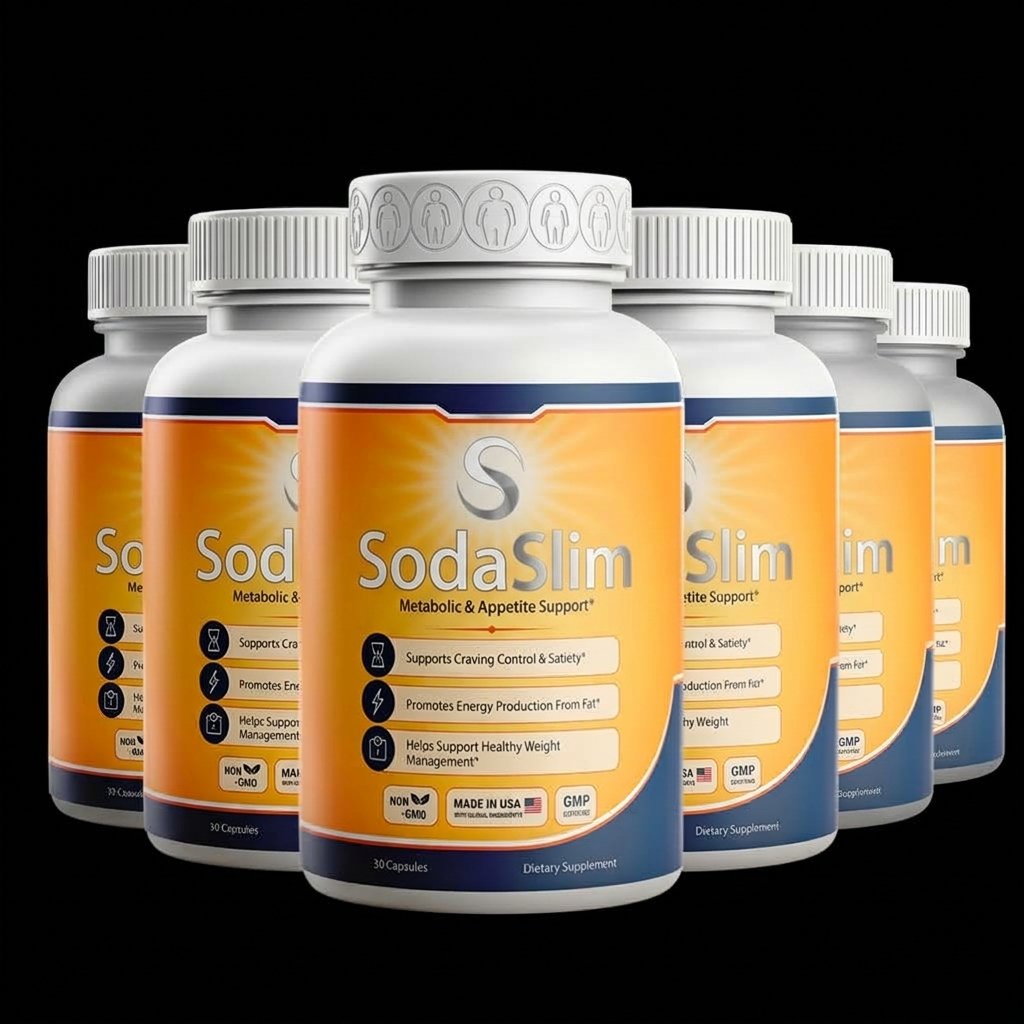
SodaSlim is a dietary supplement formulated for weight management and metabolic support, combining caffeine anhydrous with botanical extracts including green coffee bean, green tea, garcinia, and raspberry ketone. It comes in capsule form, taken once daily.
It’s designed to complement a calorie-conscious routine and regular movement — not to replace them. It is not a medication, and it is not intended to diagnose, treat, cure, or prevent obesity or any other disease.
What Is SodaSlim?
SodaSlim is a dietary supplement formulated for weight management and metabolic support, combining caffeine anhydrous with botanical extracts including green coffee bean, green tea, garcinia, and raspberry ketone. It comes in capsule form, taken once daily.
It’s designed to complement a calorie-conscious routine and regular movement — not to replace them. It is not a medication, and it is not intended to diagnose, treat, cure, or prevent obesity or any other disease.
Still Worth It in 2026?
The men’s wellness market has a short memory and an even shorter product lifecycle. Brands launch, buy traffic, collect orders and vanish once refund volume climbs. The useful question, then, isn’t whether HorseFil sounds appealing — it’s whether it survives serious scrutiny.
Where it holds up. The ingredient panel is disclosed and recognisable. The gummy format solves a real consistency problem: a supplement only works if you actually take it every day. The claims on the official page stay within reasonable bounds — support for energy, endurance and vitality — rather than promising transformation. There’s a published return policy and checkout through a named third-party processor.
Where it doesn’t. The guarantee is described inconsistently across the brand’s own pages. The ingredient count varies between sources. Exact milligram dosages aren’t published prominently. And there’s no clinical study on the finished formula.
Still Worth It in 2026?
The men’s wellness market has a short memory and an even shorter product lifecycle. Brands launch, buy traffic, collect orders and vanish once refund volume climbs. The useful question, then, isn’t whether HorseFil sounds appealing — it’s whether it survives serious scrutiny.
Where it holds up. The ingredient panel is disclosed and recognisable. The gummy format solves a real consistency problem: a supplement only works if you actually take it every day. The claims on the official page stay within reasonable bounds — support for energy, endurance and vitality — rather than promising transformation. There’s a published return policy and checkout through a named third-party processor.
Where it doesn’t. The guarantee is described inconsistently across the brand’s own pages. The ingredient count varies between sources. Exact milligram dosages aren’t published prominently. And there’s no clinical study on the finished formula.
How SodaSlim Claims to Work
Step 1 — The bottleneck almost nobody looks at
Your brain is about 2% of your body weight and consumes roughly 20% of the oxygen you breathe.
It stores none of it. There is no reserve tank. Every second of thought runs on what arrives right now, through the blood.
That delivery happens in the microvasculature — capillaries so narrow that a red blood cell has to physically deform to pass through. And vascular flexibility declines with age. That’s baseline physiology, not a marketing line.
Which reframes the entire question. When a familiar task suddenly costs more at 3pm than it did at 9am — is that a signalling failure, or is it a supply failure?
Step 2 — Nitric oxide is the dilation switch
Nitric oxide (NO) is the molecule that tells the smooth muscle lining your blood vessels to relax. Relaxed walls mean a wider channel, lower resistance, and more flow.
Your body produces NO from L-arginine, via nitric oxide synthase.
But oral arginine has a well-documented weakness: much of it is destroyed by arginase in the gut and liver before it ever reaches circulation. Which is why the second half of this formula matters more than the first.
Step 3 — Why citrulline is the smarter half of the formula
L-citrulline sidesteps that problem entirely.
It survives first-pass metabolism, travels to the kidneys, and is converted into arginine there — downstream of the enzymes that would have degraded arginine taken directly.
The counterintuitive result, shown repeatedly in the literature: oral citrulline raises plasma arginine more effectively, and for longer, than oral arginine does.
MemoHoney includes both compounds, in two forms each. That’s the most defensible design decision in the product, and it tells me whoever built this formula understood the bioavailability problem rather than just buying the cheapest amino acid on the list.
Step 4 — Niacin and beta-alanine
Niacin (B3) contributes two ways. It’s a precursor to NAD+, the coenzyme at the centre of cellular energy production. And at adequate doses it is independently vasodilatory through a prostaglandin pathway — a different door into the same room.
Beta-alanine I’ll be straight about. It’s the rate-limiting precursor to carnosine, an intracellular pH buffer and antioxidant found in muscle and brain tissue. Its evidence base is overwhelmingly in athletic performance, not cognition. The plausible rationale here is metabolic buffering in high-demand tissue. But it is the weakest link in this formula, and anyone telling you otherwise is selling you something.
Step 5 — Why it takes weeks
This is the part that determines whether you’ll succeed or waste your money.
Nitric oxide signalling isn’t a tank you fill once. Endothelial function responds to sustained substrate availability — consistent daily precursor supply. Miss three days and you aren’t 90% of the way there. You’re restarting.
That’s precisely why I felt nothing in week one and had no confidence in what I was seeing until week five.
The mechanism is cumulative. Which means the routine is the active ingredient.
SodaSlim Ingredients Review
The detail that told me this wasn’t assembled at random
Green tea catechins and caffeine are not two ingredients doing the same job. They’re a documented pairing.
The mechanism is enzymatic. Caffeine inhibits phosphodiesterase; EGCG inhibits catechol-O-methyltransferase (COMT) — the enzyme that degrades noradrenaline. One raises the signal, the other stops it being cleared. The result is a longer noradrenergic effect than either compound produces alone.
That’s why the human research on this category consistently studies green tea plus caffeine, not green tea by itself. And it’s the most likely explanation for why my pharmacy green tea pill did nothing while this behaved completely differently: it was missing the other half of the pair.
Where I’d push back: raspberry ketone is the weakest inclusion on this label. The interesting data is from cell and rodent studies. Human evidence for weight loss is thin, and I’ll say so plainly rather than pretend the label is flawless.
Are the Ingredients Scientifically Supported?
I want to be straight here, because this is where most reviews stop being useful.
Well established: Caffeine’s effects on alertness, energy expenditure, and appetite are among the best-documented in nutrition science. The green tea + caffeine thermogenic synergy has repeated human trials behind it — with modest effect sizes.
Reasonable: Green coffee bean’s chlorogenic acids have plausible mechanisms for glucose handling, with early-stage research and small effects.
Mixed: Garcinia is genuinely contested. Some reviews report small benefits, others find no meaningful difference against placebo. I won’t oversell it.
Thinnest: Raspberry ketone. Limited high-quality human research at supplement doses.
What’s missing: As with virtually every product in this category, the finished formula hasn’t been independently trialled, and exact milligram amounts aren’t published.
So here’s my honest position. I couldn’t verify the doses, so I ran the only test available to me: 56 consecutive days with everything else held constant — same job, same meals, same sleep, no new supplements, no new exercise program.
The mechanism is real and it’s modest. The changes were real and also modest. And I placed a second order in week seven with my own money, before writing a word of this.
Weigh the missing numbers. I weighed them too — and then I bought it again.

SodaSlim Ingredients Review
The detail that told me this wasn’t assembled at random
Green tea catechins and caffeine are not two ingredients doing the same job. They’re a documented pairing.
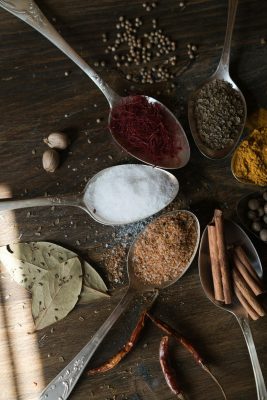
The mechanism is enzymatic. Caffeine inhibits phosphodiesterase; EGCG inhibits catechol-O-methyltransferase (COMT) — the enzyme that degrades noradrenaline. One raises the signal, the other stops it being cleared. The result is a longer noradrenergic effect than either compound produces alone.
That’s why the human research on this category consistently studies green tea plus caffeine, not green tea by itself. And it’s the most likely explanation for why my pharmacy green tea pill did nothing while this behaved completely differently: it was missing the other half of the pair.
Where I’d push back: raspberry ketone is the weakest inclusion on this label. The interesting data is from cell and rodent studies. Human evidence for weight loss is thin, and I’ll say so plainly rather than pretend the label is flawless.
Are the Ingredients Scientifically Supported?
I want to be straight here, because this is where most reviews stop being useful.
Well established: Caffeine’s effects on alertness, energy expenditure, and appetite are among the best-documented in nutrition science. The green tea + caffeine thermogenic synergy has repeated human trials behind it — with modest effect sizes.
Reasonable: Green coffee bean’s chlorogenic acids have plausible mechanisms for glucose handling, with early-stage research and small effects.
Mixed: Garcinia is genuinely contested. Some reviews report small benefits, others find no meaningful difference against placebo. I won’t oversell it.
Thinnest: Raspberry ketone. Limited high-quality human research at supplement doses.
What’s missing: As with virtually every product in this category, the finished formula hasn’t been independently trialled, and exact milligram amounts aren’t published.
So here’s my honest position. I couldn’t verify the doses, so I ran the only test available to me: 56 consecutive days with everything else held constant — same job, same meals, same sleep, no new supplements, no new exercise program.
The mechanism is real and it’s modest. The changes were real and also modest. And I placed a second order in week seven with my own money, before writing a word of this.
Weigh the missing numbers. I weighed them too — and then I bought it again.
SodaSlim My Ordering and Delivery Experience
I ordered the three-bottle package. Enough supply for a genuine trial without committing to the largest bundle before I knew anything.
Checkout was straightforward. I specifically hunted for a pre-ticked subscription box — the trap that’s caught me before — and there wasn’t one. One purchase, one charge.
The package arrived in five business days. Bottles securely packed, labels clean, ingredient and dosage information matching exactly what the site described.
How I Used SodaSlim
I kept everything else identical so the trial would actually mean something:
- One capsule each morning with water, same time daily, with breakfast.
- Same work schedule, same sleep, same general habits.
- Normal meals — I deliberately did not start an extreme diet. I wanted to know what the capsule did, not what a crash diet did.
- No other new supplements during the 56 days.
- Kept my one morning coffee, unchanged, throughout.
- A written log every single day — what I noticed, and what else might explain it.
That last one is why I have specifics instead of impressions.
SodaSlim Review: My Full 8-Week Experience
Days 1–4 — A clean lift, and no bill at the other end
I noticed the energy within the first hour. What I want to describe precisely is the quality of it: no jitter, no racing heart, no tightness. Smooth, through morning meetings.
And here’s the part that mattered more than the lift itself. There was no crash. With a second cup of coffee I get a good hour and then pay for it around 1 p.m. This never presented a bill.
Digestion stayed completely normal, which surprised me — my stomach is usually sensitive to anything new, and this contains stimulants.
No weight change. Nor should there have been.
Week 1–2 — The first thing I wrote down
Appetite was where I noticed something first, and it wasn’t what I expected.
I didn’t stop wanting snacks. I stopped reaching automatically. There’s a difference, and it’s the whole thing: the pastry at 10 a.m. went from being something my hand did to being something I had to actually decide about.
I noted it, then wrote “probably just paying attention because I’m on a plan” beside it — because I wasn’t going to fool myself two weeks in.
In hindsight it was the first entry in the pattern. At the time it looked like a good Tuesday.
Week 3–4 — The Wednesday
This is the one I remember.
Wednesday afternoon. Historically the exact hour and the exact day where every attempt I’d ever made had died. Three years of evidence, same checkpoint.
I got to 4 p.m., finished what I was working on, and realised I hadn’t been to the kitchen once.
Not through gritted teeth. I’d simply forgotten to go.
That’s what stopped me — not the scale, which had moved down modestly and unremarkably. It was that the collapse hadn’t arrived on schedule. My pants had started sitting slightly differently around the waist, but honestly, the Wednesday mattered more, because Wednesday was the thing that had beaten me every time.
One good afternoon proves nothing alone, and I knew that. So I stopped looking for a feeling and started watching one specific thing: whether Wednesday came back.
Over the next month, it didn’t.
Week 5–6 — Where it stopped being an anecdote
This is the stretch that convinced me, and it convinced me through something smaller than the Wednesday.
Stress stopped being an automatic off-switch.
Month-end close landed in week six — my worst stretch of any month. Previously that guaranteed the routine was finished: long hours, bad food, start again in July.
It didn’t happen. I had stressful days and I still wanted the junk. The difference was that wanting it and doing it had come apart. The gap between craving and action stayed open long enough for me to actually stand in it.
By this point taking the capsule had become automatic, and some clothes were fitting more comfortably. But the biggest change was psychological, and I want to be precise about it: I stopped waiting for the whole thing to fall apart. After three years of Wednesday, that expectation was the heaviest thing I was carrying.
Week 7–8 — Stable, and I reordered
By the final fortnight the picture was consistent enough to state plainly.
This did not melt fat off me. The scale moved modestly across eight weeks. If you’re expecting a dramatic before-and-after, this formula will disappoint you, and it never claimed otherwise.
What it changed was narrower and worth far more to me:
The 2 p.m. collapse stopped setting my diet on fire. Cravings still happened. They stopped being decisions made on my behalf. I still had stressful days; they stopped ending the routine.
I placed my second order in week seven, before running out, because thermogenic and appetite effects build with consistent use and I wasn’t giving back seven weeks of ground.
SodaSlim Results: What I Personally Noticed
The changes built gradually rather than arriving at once.
Cravings became decisions instead of reflexes. The single most valuable change, and the one I’d pay for again.
The afternoon crash stopped arriving on schedule. Steady energy through the last hours, without a rebound.
My waistband eased. Noticeably, by mid-trial. Modestly, in honest terms.
The scale moved down — modestly. I’m not going to inflate a number to sell you a bottle.
Stress stopped being a trigger with automatic consequences.
And no cost anywhere else. No jitters, no crash, no stomach trouble, no sleep disruption across 56 consecutive days.
The most accurate summary I can give: it didn’t give me discipline I’ve never had. It gave me back the energy I needed to use the discipline I already had.
I’m not claiming the capsule alone caused all of it. I held everything else constant for eight weeks, and this is what changed.
Side Effects I Noticed
Fifty-six consecutive days. No headaches, no jitters, no palpitations, no stomach upset, no change to my sleep.
That clean run is partly the formula and partly the design: five ingredients instead of twenty means five things that can go wrong instead of twenty. It was easier on my stomach than I expected for a stimulant-containing product.
Two things worth knowing honestly:
This contains caffeine, and stimulant sensitivity varies enormously. I tolerate caffeine well. Someone who doesn’t may experience jitteriness or an elevated heart rate. That’s not a formula defect — it’s a matching problem, and you know which side of it you’re on.
Timing is not optional. Taken late in the day, this will affect your sleep, and poor sleep is one of the most reliable ways to gain weight. Morning, always.
Green tea extract at very high concentrated doses has been associated in rare cases with liver-related events — those cases involved doses well above typical supplement levels, but it’s the reason not to stack it with other green tea products. Anyone with a medical condition, particularly high blood pressure, should check with a healthcare professional first.
SodaSlim Results: What I Personally Noticed
The changes built gradually rather than arriving at once.
Cravings became decisions instead of reflexes. The single most valuable change, and the one I’d pay for again.
The afternoon crash stopped arriving on schedule. Steady energy through the last hours, without a rebound.
My waistband eased. Noticeably, by mid-trial. Modestly, in honest terms.
The scale moved down — modestly. I’m not going to inflate a number to sell you a bottle.
Stress stopped being a trigger with automatic consequences.
And no cost anywhere else. No jitters, no crash, no stomach trouble, no sleep disruption across 56 consecutive days.
The most accurate summary I can give: it didn’t give me discipline I’ve never had. It gave me back the energy I needed to use the discipline I already had.
I’m not claiming the capsule alone caused all of it. I held everything else constant for eight weeks, and this is what changed.
Side Effects I Noticed
Fifty-six consecutive days. No headaches, no jitters, no palpitations, no stomach upset, no change to my sleep.
That clean run is partly the formula and partly the design: five ingredients instead of twenty means five things that can go wrong instead of twenty. It was easier on my stomach than I expected for a stimulant-containing product.
Two things worth knowing honestly:
This contains caffeine, and stimulant sensitivity varies enormously. I tolerate caffeine well. Someone who doesn’t may experience jitteriness or an elevated heart rate. That’s not a formula defect — it’s a matching problem, and you know which side of it you’re on.
Timing is not optional. Taken late in the day, this will affect your sleep, and poor sleep is one of the most reliable ways to gain weight. Morning, always.
Green tea extract at very high concentrated doses has been associated in rare cases with liver-related events — those cases involved doses well above typical supplement levels, but it’s the reason not to stack it with other green tea products. Anyone with a medical condition, particularly high blood pressure, should check with a healthcare professional first.
Is SodaSlim Legit or a Scam?
Not a scam — and rather than assert that, here’s the checklist I actually used before ordering.
What a scam looks like in this category: a proprietary blend concealing filler; a subscription buried in checkout; before-and-after photos of different people; claims to burn fat without diet or exercise; a fake countdown timer; no realistic route to a refund.
What I found instead:
- Five ingredients, every one disclosed by name. In this aisle, rarer than it should be.
- No subscription enrolment. I looked specifically. One purchase, one charge.
- A mechanism that holds up — the green tea + caffeine pairing is real pharmacology, not marketing.
- Restrained claims. It’s positioned as support for existing habits, not as a replacement for them.
- A 60-day guarantee, honoured through the official site.
- A product that arrived matching its label and behaved exactly as described.
My one real criticism: the milligram amounts aren’t published, and I’d like them to be. Sarah — another reader whose experience our editorial team reviewed — raised exactly the same point, wishing the caffeine dose were printed more visibly so she could manage her total daily intake. It’s a fair complaint, and it’s the same one I have.
But I’d rather buy a fully-named five-ingredient formula with undisclosed quantities than a “Proprietary Thermogenic Matrix™” where I don’t even know what I’m swallowing. And the practical answer to the dosage question was the eight weeks themselves: it worked, and then I bought it again.
My experience doesn’t guarantee yours. But nothing about the ordering, delivery, or use of this product made me feel misled — and I’d suggest ordering only from the official site so the current guarantee terms apply.
My Before and After
Before. Frustrated with myself more than anything. New diet every Monday, dead by Wednesday. Dreading 2 p.m. Declining invitations because I knew food would test a willpower I no longer trusted. Every failed attempt adding to the conclusion that I just couldn’t stick to anything.
After eight weeks. I’m not fighting myself over food. Afternoons are steady. Cravings happen and then I decide. My pants fit more comfortably. Month-end close came and went without ending the routine.
I still make the choices. The difference is that I now have something left to make them with by 2 p.m.
None of it was dramatic. It accumulated, exactly as the mechanism says it should, until one Wednesday I noticed I’d stopped waiting for the whole thing to collapse.
Modest, real, and repeatable beats dramatic and imaginary. That’s my whole review in one sentence.
Is SodaSlim Legit or a Scam?
Not a scam — and rather than assert that, here’s the checklist I actually used before ordering.
What a scam looks like in this category: a proprietary blend concealing filler; a subscription buried in checkout; before-and-after photos of different people; claims to burn fat without diet or exercise; a fake countdown timer; no realistic route to a refund.
What I found instead:
- Five ingredients, every one disclosed by name. In this aisle, rarer than it should be.
- No subscription enrolment. I looked specifically. One purchase, one charge.
- A mechanism that holds up — the green tea + caffeine pairing is real pharmacology, not marketing.
- Restrained claims. It’s positioned as support for existing habits, not as a replacement for them.
- A 60-day guarantee, honoured through the official site.
- A product that arrived matching its label and behaved exactly as described.
My one real criticism: the milligram amounts aren’t published, and I’d like them to be. Sarah — another reader whose experience our editorial team reviewed — raised exactly the same point, wishing the caffeine dose were printed more visibly so she could manage her total daily intake. It’s a fair complaint, and it’s the same one I have.
But I’d rather buy a fully-named five-ingredient formula with undisclosed quantities than a “Proprietary Thermogenic Matrix™” where I don’t even know what I’m swallowing. And the practical answer to the dosage question was the eight weeks themselves: it worked, and then I bought it again.
My experience doesn’t guarantee yours. But nothing about the ordering, delivery, or use of this product made me feel misled — and I’d suggest ordering only from the official site so the current guarantee terms apply.
My Before and After
Before. Frustrated with myself more than anything. New diet every Monday, dead by Wednesday. Dreading 2 p.m. Declining invitations because I knew food would test a willpower I no longer trusted. Every failed attempt adding to the conclusion that I just couldn’t stick to anything.
After eight weeks. I’m not fighting myself over food. Afternoons are steady. Cravings happen and then I decide. My pants fit more comfortably. Month-end close came and went without ending the routine.
I still make the choices. The difference is that I now have something left to make them with by 2 p.m.
None of it was dramatic. It accumulated, exactly as the mechanism says it should, until one Wednesday I noticed I’d stopped waiting for the whole thing to collapse.
Modest, real, and repeatable beats dramatic and imaginary. That’s my whole review in one sentence.
Side Effects I Noticed
Fifty-six consecutive days. No headaches, no jitters, no palpitations, no stomach upset, no change to my sleep.
That clean run is partly the formula and partly the design: five ingredients instead of twenty means five things that can go wrong instead of twenty. It was easier on my stomach than I expected for a stimulant-containing product.
Two things worth knowing honestly:
This contains caffeine, and stimulant sensitivity varies enormously. I tolerate caffeine well. Someone who doesn’t may experience jitteriness or an elevated heart rate. That’s not a formula defect — it’s a matching problem, and you know which side of it you’re on.
Timing is not optional. Taken late in the day, this will affect your sleep, and poor sleep is one of the most reliable ways to gain weight. Morning, always.
Green tea extract at very high concentrated doses has been associated in rare cases with liver-related events — those cases involved doses well above typical supplement levels, but it’s the reason not to stack it with other green tea products. Anyone with a medical condition, particularly high blood pressure, should check with a healthcare professional first.
Frequently Asked Questions About SodaSlim
How long does SodaSlim take to work?
For me: an energy shift within the first few days, appetite changes across the first two weeks, the first unmistakable signal in week three, and a stable pattern by week five. Allow 50 days minimum before judging it.
Will I feel anything on day one?
Probably, yes — a clean energy lift within the first hour. That’s the caffeine. The appetite and metabolic effects are the slow part, and those are the ones that matter.
Does SodaSlim cause side effects?
I had none across 56 consecutive days. It contains caffeine, so anyone stimulant-sensitive should watch their tolerance and total daily intake.
Can I take it with coffee?
Yes, but carefully. If you drink two or more cups daily, reduce by one cup before adding the capsule. Stacking caffeine is the most common cause of a bad experience with this product.
Will it affect my sleep?
Not if taken in the morning — mine was unaffected throughout. Taken after 2 p.m., it very likely will. Morning only.
How do you take it?
One capsule each morning with a full glass of water, per the label. Don’t exceed the recommended dose.
Is SodaSlim FDA approved?
No. Like all dietary supplements, it isn’t FDA-approved. The manufacturer states it’s produced in an FDA-registered, GMP-certified facility — which refers to the facility, not the product.
Is it a subscription?
No. I checked specifically at checkout. One-time purchase, single charge, no auto-renewal.
Do I need a prescription?
No. It’s sold as an over-the-counter dietary supplement.
Is it legitimate?
Based on my own research and eight weeks of use, yes. My order arrived as expected, labelling was clear, the guarantee terms were published before purchase, and I reordered with my own money.
The 60-Day Guarantee — and Its Timing Problem

The guarantee is honoured, and it’s why the risk here is asymmetric: you can lose eight weeks. You can’t easily lose the money.
But here’s the thing nobody selling this will point out, and it’s the most useful sentence on this page.
The mechanism needs about 50 days to declare itself. The refund window closes at 60.
Ten days of margin — enough, but only if you’re deliberate. So:
On the day your order arrives, write the date 50 days out where you’ll see it.
Do that and the guarantee protects you completely. You’ll reach a real verdict with time in hand, and the decision costs you nothing but consistency.
Drift for three weeks the way most people do with a new bottle, start taking it seriously in month two, and you’ll reach your answer after the window has shut — and you’ll have paid for the privilege of never finding out.
The guarantee is only as good as your calendar.
SodaSlim Price, Discount and Deals
What I’d tell a friend across the table.
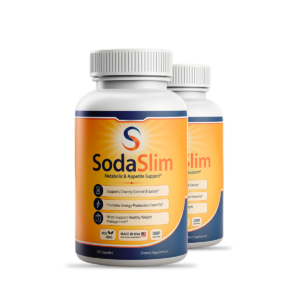
Skip the two-bottle option — not to push you upward, but because it can’t answer the question. The honest evaluation window for a thermogenic formula is 8–12 weeks, and a 60-day supply leaves no margin for the mornings you’ll inevitably miss. You’d be paying $158 plus shipping to run a test that comes back inconclusive.
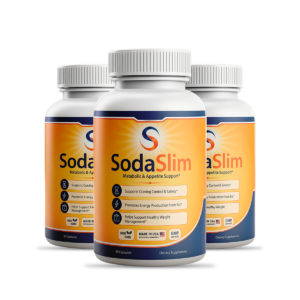
Three bottles is the smallest order that can actually give you an answer. That’s exactly why I chose it: 90 days, free shipping, and 30 days of margin against my own imperfect consistency.
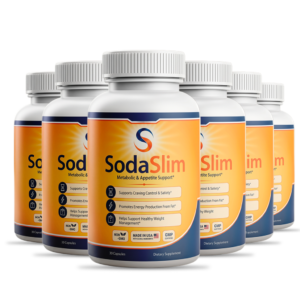
Six bottles is far better economics — $49 against $79 is a 38% lower cost per bottle — and knowing what I know now, that’s what I’d have ordered, because I’m still taking it and I’ve now paid the higher price twice. I didn’t, because I hadn’t tested it yet. If that’s where you are, three bottles is the right call.
At $69 a bottle, this is a little over two dollars a day. I was spending more than that on the afternoon coffee-and-pastry combination it replaced — and that combination was working against me in both directions.



Conclusion

If you’ve read this far, you’re probably close to where I was in June — tired of paying for bottles that do nothing, and quietly convinced the problem might be you.
So here’s what I’d say across a table.
It won’t melt fat off you. It won’t replace balanced eating or movement, and taken after 2 p.m. it will actively work against you. Nothing dramatic will happen in the first fortnight, and that’s the mechanism rather than a failure.
What it did instead was narrower, and worth far more to me than the promises I’d already paid for and thrown away. The 2 p.m. collapse stopped setting my diet on fire. Cravings became decisions instead of reflexes. Month-end close came and went and the routine survived it. One Wednesday afternoon, I got to 4 p.m. and realised I hadn’t been to the kitchen once — and I hadn’t been fighting.
And I’ll give you the criticism too, because a review that only praises isn’t a review: they don’t publish the milligram doses, and I wish they did. I noticed changes anyway. Then I reordered in week seven with my own money, before writing any of this — which is the most honest thing I can tell you about how much that criticism finally weighed.
Here’s the part that’s actually in your hands.
Three bottles is 90 capsules. The guarantee gives you 60 days. The mechanism needs 50.
Use fifty of them, then decide.
That’s the only version of this experiment that produces a real answer — and it’s the one thing nobody can do for you. Fifty mornings, next to the coffee maker, and either Wednesday stops beating you or your money comes back.
Where to Buy SodaSlim

Only through the official SodaSlim website.
That isn’t generic advice — it’s specific to this formula. This is a stimulant product with a caffeine content that isn’t published. A counterfeit with the wrong quantity isn’t merely useless; it’s an unknown dose of a cardiovascular stimulant. “Probably fine” isn’t a standard I’d accept there.
Buying direct is also the only route that keeps the 60-day guarantee intact. Third-party sellers don’t honour it, and the manufacturer has no obligation to cover a bottle it never sold.