MemoHoney Review

I'm 61 and I Spent a Year Losing the Thread of My Own Sentences. Turns Out I Was Blaming the Wrong Organ
After eight weeks on MemoHoney, the change wasn’t in my memory. It was in the 3pm I’d stopped expecting anything from. Here’s the honest account — including what the label refuses to tell you.
Methodology | Fact Checked by Nathan Cole | Published September 9, 2026 | Updated September 13, 2026
I'm 61 and I Spent a Year Losing the Thread of My Own Sentences. Turns Out I Was Blaming the Wrong Organ

After eight weeks on MemoHoney, the change wasn’t in my memory. It was in the 3pm I’d stopped expecting anything from. Here’s the honest account — including what the label refuses to tell you.
Methodology | Fact Checked by Nathan Cole | Published September 9, 2026 | Updated September 13, 2026

The Sentence I Couldn't Finish
I was on the phone with a client I’d worked with for nine years, explaining a rider on a term life policy, and halfway through the sentence I lost it. Not the word. The whole thought. The place I’d been going.
I did what everyone does. Small laugh. “Sorry — where was I?” She helped me out. We moved on.
But I sat in that chair afterwards for a while, not doing anything.
It wasn’t that it happened. It was that it was the fourth time that month, and I had started to notice a pattern in when it happened. Never in the morning. Always after two or three o’clock. Always on days with a lot of switching — calls, then spreadsheets, then email, then calls again.
For a year I assumed the problem was my memory. It took me eight weeks with a supplement I was fully prepared to dismiss to start suspecting I’d been blaming the wrong organ entirely.
This is my honest account of it.
I’m Robert Miller, 61, an independent insurance consultant in Columbus, Ohio.
My work is almost entirely small facts held in short-term memory. Policy numbers. Renewal dates. Which of two brothers is the beneficiary and which one thinks he is. A normal Tuesday is a dozen client calls, forty emails, and three spreadsheets that all look identical.
I wasn’t trying to feel 25 again. I wanted to get through a Tuesday without feeling like the last three hours cost double what the first three did.
The Problem That Got Hard to Ignore
It arrived gradually, which is exactly why it took so long to admit.
I began rereading emails — not because they were unclear, but because I’d finished them without absorbing them. I’d walk into the next room and stand there, waiting for the reason to come back. Names of people I’d known for years would sit just out of reach for two or three seconds. Never gone. Just delayed.
Individually, all of it is normal. Everyone I know in their sixties has the same stories, and we make the same jokes about them.
What bothered me was the time of day. Mornings were fine. Genuinely fine. By 3pm, reading a four-page document felt like walking uphill — I’d get to page 20 of something and realize the words had stopped meaning anything and I’d have to go back.
That pattern is what eventually made me curious rather than just resigned. A memory problem doesn’t check the clock. Whatever this was, it did.
What I Tried First — and Why It Failed
I’m not the sort of person who reaches for a bottle first. Over about eighteen months I tried, roughly in order:
- More coffee. Bought me forty minutes and cost me the 4pm.
- Better sleep hygiene. No screens after nine. I did this properly for six weeks. My sleep improved. My afternoons didn’t.
- Walking at lunch. Genuinely helpful. Not enough.
- Brain training apps. I got very good at the app. That’s all that happened.
- A multivitamin. No perceptible effect on anything.
- Two “cognitive support” supplements. Both stacked with Ginkgo and Bacopa. One had undisclosed caffeine that ruined two nights before I read the label properly. Neither did anything I could point to.
Here’s the pattern I only saw later: every supplement I tried was aimed at the same thing. Neurotransmitters. Neural signalling. The chemistry of thought.
Not one of them was aimed at whether anything was actually getting to the brain doing the thinking.
How I Heard About MemoHoney
Daniel, over coffee. He’s 64, sells commercial real estate, and complains about exactly the same afternoons I do.
He mentioned he’d been taking something called MemoHoney for a few months and that his afternoons had gotten easier. Not sharper — easier. That word is the reason I didn’t dismiss it, because it was the word I’d have used myself.
I still didn’t buy it that week. I went home, pulled up the label, and read the ingredient list.
And then I read it again, because I assumed I’d missed something.
What Is MemoHoney?
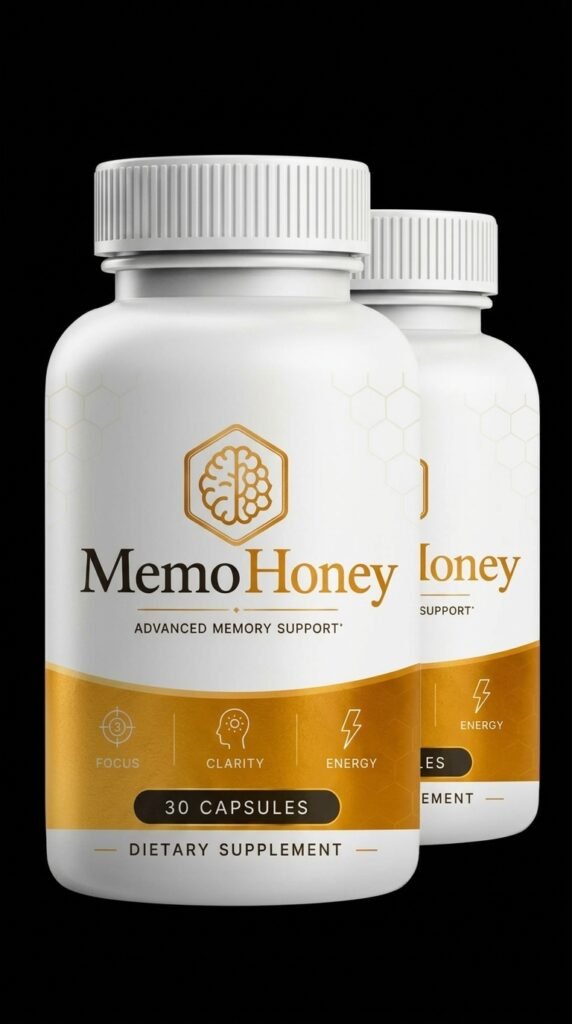
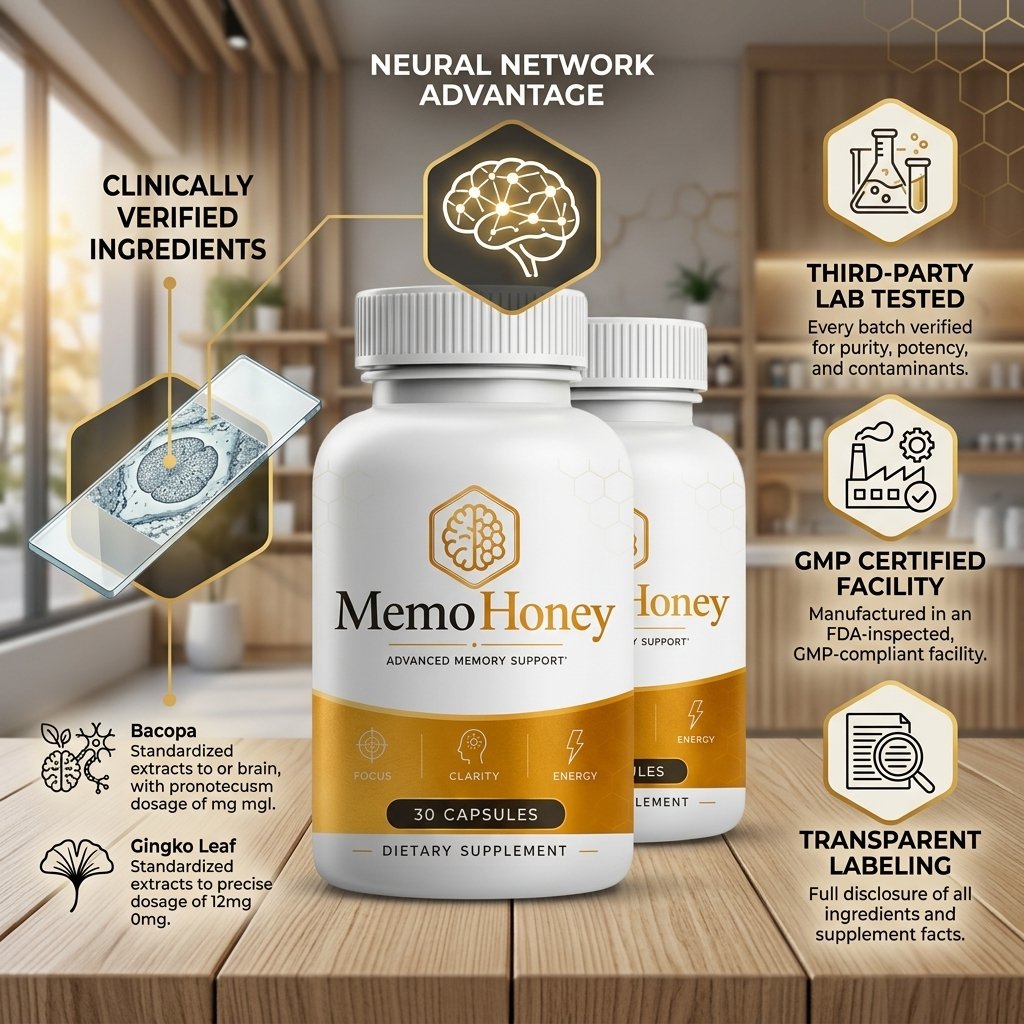
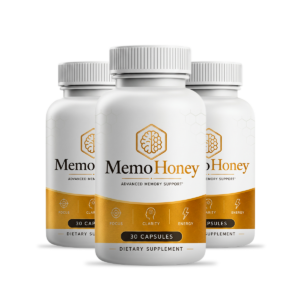
MemoHoney is a once-daily dietary supplement built around six ingredients aimed at one specific target: how much oxygenated blood reaches your brain.
That framing is unusual, and it’s the whole story of this product.
What it is:
- A stimulant-free daily capsule — no caffeine, no crash, no interference with sleep
- A circulation-first approach to everyday mental clarity
- A fully disclosed label — six named ingredients, no proprietary blend
- Made in the USA in a GMP-registered facility, per manufacturer information
- Backed by a 60-day money-back guarantee, sold only through the official site
- No automatic subscription
What it is not:
- Not a medication. Not a treatment for any diagnosed condition.
- Not a nootropic in the conventional sense — different mechanism entirely
- Not honey, and not a gummy. Despite the name, it’s a capsule. I want that clear because the name misled me before I saw the bottle.
- Not fast. This is a compounding routine, not a same-day effect.
And one transparency note I’m going to repeat everywhere it’s relevant: the label does not publish milligram amounts per ingredient. That’s a real limitation and I’ll come back to it.
What Is MemoHoney?
MemoHoney is a once-daily dietary supplement built around six ingredients aimed at one specific target: how much oxygenated blood reaches your brain.
That framing is unusual, and it’s the whole story of this product.
What it is:
- A stimulant-free daily capsule — no caffeine, no crash, no interference with sleep
- A circulation-first approach to everyday mental clarity
- A fully disclosed label — six named ingredients, no proprietary blend
- Made in the USA in a GMP-registered facility, per manufacturer information
- Backed by a 60-day money-back guarantee, sold only through the official site
- No automatic subscription
What it is not:
- Not a medication. Not a treatment for any diagnosed condition.
- Not a nootropic in the conventional sense — different mechanism entirely
- Not honey, and not a gummy. Despite the name, it’s a capsule. I want that clear because the name misled me before I saw the bottle.
- Not fast. This is a compounding routine, not a same-day effect.
And one transparency note I’m going to repeat everywhere it’s relevant: the label does not publish milligram amounts per ingredient. That’s a real limitation and I’ll come back to it.
Still Worth It in 2026?
The men’s wellness market has a short memory and an even shorter product lifecycle. Brands launch, buy traffic, collect orders and vanish once refund volume climbs. The useful question, then, isn’t whether HorseFil sounds appealing — it’s whether it survives serious scrutiny.
Where it holds up. The ingredient panel is disclosed and recognisable. The gummy format solves a real consistency problem: a supplement only works if you actually take it every day. The claims on the official page stay within reasonable bounds — support for energy, endurance and vitality — rather than promising transformation. There’s a published return policy and checkout through a named third-party processor.
Where it doesn’t. The guarantee is described inconsistently across the brand’s own pages. The ingredient count varies between sources. Exact milligram dosages aren’t published prominently. And there’s no clinical study on the finished formula.
Still Worth It in 2026?
The men’s wellness market has a short memory and an even shorter product lifecycle. Brands launch, buy traffic, collect orders and vanish once refund volume climbs. The useful question, then, isn’t whether HorseFil sounds appealing — it’s whether it survives serious scrutiny.
Where it holds up. The ingredient panel is disclosed and recognisable. The gummy format solves a real consistency problem: a supplement only works if you actually take it every day. The claims on the official page stay within reasonable bounds — support for energy, endurance and vitality — rather than promising transformation. There’s a published return policy and checkout through a named third-party processor.
Where it doesn’t. The guarantee is described inconsistently across the brand’s own pages. The ingredient count varies between sources. Exact milligram dosages aren’t published prominently. And there’s no clinical study on the finished formula.
How Does MemoHoney Work?
Step 1 — The bottleneck almost nobody looks at
Your brain is about 2% of your body weight and consumes roughly 20% of the oxygen you breathe.
It stores none of it. There is no reserve tank. Every second of thought runs on what arrives right now, through the blood.
That delivery happens in the microvasculature — capillaries so narrow that a red blood cell has to physically deform to pass through. And vascular flexibility declines with age. That’s baseline physiology, not a marketing line.
Which reframes the entire question. When a familiar task suddenly costs more at 3pm than it did at 9am — is that a signalling failure, or is it a supply failure?
Step 2 — Nitric oxide is the dilation switch
Nitric oxide (NO) is the molecule that tells the smooth muscle lining your blood vessels to relax. Relaxed walls mean a wider channel, lower resistance, and more flow.
Your body produces NO from L-arginine, via nitric oxide synthase.
But oral arginine has a well-documented weakness: much of it is destroyed by arginase in the gut and liver before it ever reaches circulation. Which is why the second half of this formula matters more than the first.
Step 3 — Why citrulline is the smarter half of the formula
L-citrulline sidesteps that problem entirely.
It survives first-pass metabolism, travels to the kidneys, and is converted into arginine there — downstream of the enzymes that would have degraded arginine taken directly.
The counterintuitive result, shown repeatedly in the literature: oral citrulline raises plasma arginine more effectively, and for longer, than oral arginine does.
MemoHoney includes both compounds, in two forms each. That’s the most defensible design decision in the product, and it tells me whoever built this formula understood the bioavailability problem rather than just buying the cheapest amino acid on the list.
Step 4 — Niacin and beta-alanine
Niacin (B3) contributes two ways. It’s a precursor to NAD+, the coenzyme at the centre of cellular energy production. And at adequate doses it is independently vasodilatory through a prostaglandin pathway — a different door into the same room.
Beta-alanine I’ll be straight about. It’s the rate-limiting precursor to carnosine, an intracellular pH buffer and antioxidant found in muscle and brain tissue. Its evidence base is overwhelmingly in athletic performance, not cognition. The plausible rationale here is metabolic buffering in high-demand tissue. But it is the weakest link in this formula, and anyone telling you otherwise is selling you something.
Step 5 — Why it takes weeks
This is the part that determines whether you’ll succeed or waste your money.
Nitric oxide signalling isn’t a tank you fill once. Endothelial function responds to sustained substrate availability — consistent daily precursor supply. Miss three days and you aren’t 90% of the way there. You’re restarting.
That’s precisely why I felt nothing in week one and had no confidence in what I was seeing until week five.
The mechanism is cumulative. Which means the routine is the active ingredient.
Memohoney Ingredients — Full Breakdown
L-Arginine
Direct precursor to nitric oxide via nitric oxide synthase. Also participates in the urea cycle. Its limitation is bioavailability — substantial degradation by intestinal and hepatic arginase before reaching systemic circulation. Role here: foundational NO substrate.
L-Arginine AKG 2:1
Arginine bound to alpha-ketoglutarate in a 2:1 ratio. AKG is a Krebs cycle intermediate feeding directly into ATP production. This form carries a dual payload — NO substrate plus a metabolic input. Role here: arginine delivery with an energy-metabolism component.
L-Citrulline HCL
The workhorse. Evades first-pass arginase degradation and converts to arginine in the kidneys, producing a more sustained plasma arginine elevation than arginine itself. The hydrochloride form aids solubility and stability. Role here: the formula’s most efficient contributor to the NO pathway.
L-Citrulline Malate
Citrulline paired with malic acid, another Krebs cycle intermediate associated with lactate clearance and aerobic energy production. Widely studied in exercise contexts for reduced perceived fatigue. Role here: NO support plus a fatigue-related metabolic contribution.
Niacin (Vitamin B3)
An essential vitamin and precursor to NAD+ and NADP+, coenzymes required for cellular energy production and normal neuronal function. Independently vasodilatory at adequate doses. Niacin deficiency has documented cognitive consequences — which makes this the one ingredient in the formula with an unambiguous, non-negotiable role in how a brain works. Role here: energy metabolism, nervous system function, secondary vasodilation.
Beta-Alanine
Rate-limiting precursor to carnosine, a dipeptide that buffers intracellular pH and acts as an antioxidant, concentrated in muscle and brain tissue. Role here: metabolic buffering — and the thinnest cognitive evidence in the formula. Worth knowing before you buy.

Memohoney Ingredients — Full Breakdown

L-Arginine
Direct precursor to nitric oxide via nitric oxide synthase. Also participates in the urea cycle. Its limitation is bioavailability — substantial degradation by intestinal and hepatic arginase before reaching systemic circulation. Role here: foundational NO substrate.
L-Arginine AKG 2:1
Arginine bound to alpha-ketoglutarate in a 2:1 ratio. AKG is a Krebs cycle intermediate feeding directly into ATP production. This form carries a dual payload — NO substrate plus a metabolic input. Role here: arginine delivery with an energy-metabolism component.
L-Citrulline HCL
The workhorse. Evades first-pass arginase degradation and converts to arginine in the kidneys, producing a more sustained plasma arginine elevation than arginine itself. The hydrochloride form aids solubility and stability. Role here: the formula’s most efficient contributor to the NO pathway.
L-Citrulline Malate
Citrulline paired with malic acid, another Krebs cycle intermediate associated with lactate clearance and aerobic energy production. Widely studied in exercise contexts for reduced perceived fatigue. Role here: NO support plus a fatigue-related metabolic contribution.
Niacin (Vitamin B3)
An essential vitamin and precursor to NAD+ and NADP+, coenzymes required for cellular energy production and normal neuronal function. Independently vasodilatory at adequate doses. Niacin deficiency has documented cognitive consequences — which makes this the one ingredient in the formula with an unambiguous, non-negotiable role in how a brain works. Role here: energy metabolism, nervous system function, secondary vasodilation.
Beta-Alanine
Rate-limiting precursor to carnosine, a dipeptide that buffers intracellular pH and acts as an antioxidant, concentrated in muscle and brain tissue. Role here: metabolic buffering — and the thinnest cognitive evidence in the formula. Worth knowing before you buy.
How I Took It
The protocol: one capsule daily with a full glass of water.
Four things that actually mattered:
Morning, before food. Amino acid absorption competes with dietary protein for the same transporters. An empty stomach means less competition.
Same time every day. The mechanism depends on continuous substrate presence, not peak concentration. I put the bottle next to the coffee maker, because a routine that requires remembering is a routine that fails.
Nothing stacked with it. I ran no other cognitive supplement for the full eight weeks. If you add three things at once and something improves, you’ve learned nothing about any of them.
Fifty days minimum before judging. Week one will feel like nothing. That’s the mechanism, not a failure.
Don’t exceed one capsule. More arginine does not produce more nitric oxide — the enzymatic pathway saturates. Excess mostly buys you gastrointestinal discomfort.
My Full 8-Week Timeline
Days 1–4 — Nothing, and that’s the first good sign
No lift. No focus. No sensation of any kind.
If you’ve bought supplements before, you know the feeling of taking something and getting a noticeable buzz within twenty minutes. I’ve had it twice, and both times the label turned out to contain caffeine I hadn’t noticed.
So the silence here told me something useful: whatever this was doing, it wasn’t borrowing energy from later in the day. Nothing was being fronted to me on credit. That’s the difference between a stimulant and a supply mechanism, and it’s the reason my sleep never changed for eight weeks.
Week 1–2 — The first thing I wrote down
My focus still tracked my sleep closely. Bad night, harder afternoon.
Then toward the end of week two, I got through a stack of morning paperwork with noticeably less resistance than it usually takes. I wrote it in my notebook, and I wrote “probably nothing” beside it, because I’d slept well and I wasn’t going to fool myself two weeks in.
I mention it because in hindsight it was the first entry in the pattern. At the time it just looked like a good Tuesday. That’s how this product announces itself — quietly, and slightly before you’re willing to believe it.
Week 3–4 — The Thursday
This is the one I remember.
I was reviewing a group benefits document — 60-odd pages, dense, the sort of thing I’d normally break into three sittings with coffee between them. Half past two in the afternoon, historically the worst hour of my day.
I looked up to check the clock and I was on page 41.
And I hadn’t gone back once.
That’s the detail that stopped me. Not speed — I hadn’t read fast. It was that for eighteen months, page 20 was where the words started sliding off each other. Where I’d reach the bottom of a paragraph and know I’d have to do it again. That checkpoint had been so reliable I had built my entire workday around avoiding it. I scheduled around page 20 the way you’d schedule around a bad knee.
And I’d gone twice that far, at the worst hour, without noticing I’d passed it.
I sat back in the chair. Then I did something I’d never done with any supplement I’d tried: I went and checked the calendar to count the days. Twenty-three. Three weeks and two days into a formula built entirely around blood flow, at exactly the point where a cumulative mechanism would be expected to start showing.
One good afternoon proves nothing on its own, and I knew that. So I stopped watching for a feeling and started watching for that specific thing — whether the wall came back.
Over the next month, it didn’t.
Week 5–6 — Where it stopped being an anecdote
This is the stretch that convinced me, and it convinced me through something smaller than page 41.
Switching costs.
A phone call used to end and then charge me a fee. I’d hang up, look at the spreadsheet, and sit there for a minute or more waiting for context to reload — that blank interval where you know what you were doing but can’t get back into it. Twelve calls a day, and every one of them collected.
By week five, that gap was gone. Not shortened. I stopped experiencing it, and I only realized it because I’d been tracking it deliberately. Getting back into work after an interruption became close to free.
Run that across a day of a dozen calls and it isn’t a subtle difference. It’s the difference between finishing at five and finishing at six-thirty with nothing left.
The afternoons still felt like afternoons — I still knew I’d worked. But the quality of it had changed completely. It was tiredness instead of fog. Being worn down and being unable to hold a thought are two entirely different experiences, and by week five I could tell them apart, because I’d stopped having the second one.
Week 7–8 — What it delivers, and what it doesn’t pretend to
By the last fortnight the picture was stable enough to describe precisely.
I still use a calendar and a notepad, and I always will. I still occasionally reach for a name and find it a second late. MemoHoney did not turn my memory into something it has never been — and once I understood the mechanism, that stopped being a disappointment. Nitric oxide governs delivery. It was never going to rewrite recall, and the formula never claimed it would. That restraint is actually why I trusted it.
What it changed is the thing I’d been trying to buy for eighteen months:
My afternoons stopped being a degraded version of my mornings.
I now schedule document review after lunch. I hadn’t done that in two years. The last three hours of a Tuesday cost roughly what the first three cost, and that single change gave me back somewhere in the region of two usable hours a day.
That’s a narrower promise than the one printed on most bottles in this category. It’s also the only one of them that turned out to be true, and it’s worth considerably more to me than the ones that weren’t.
MemoHoney Results
After eight weeks, here’s what I’d put my name to.
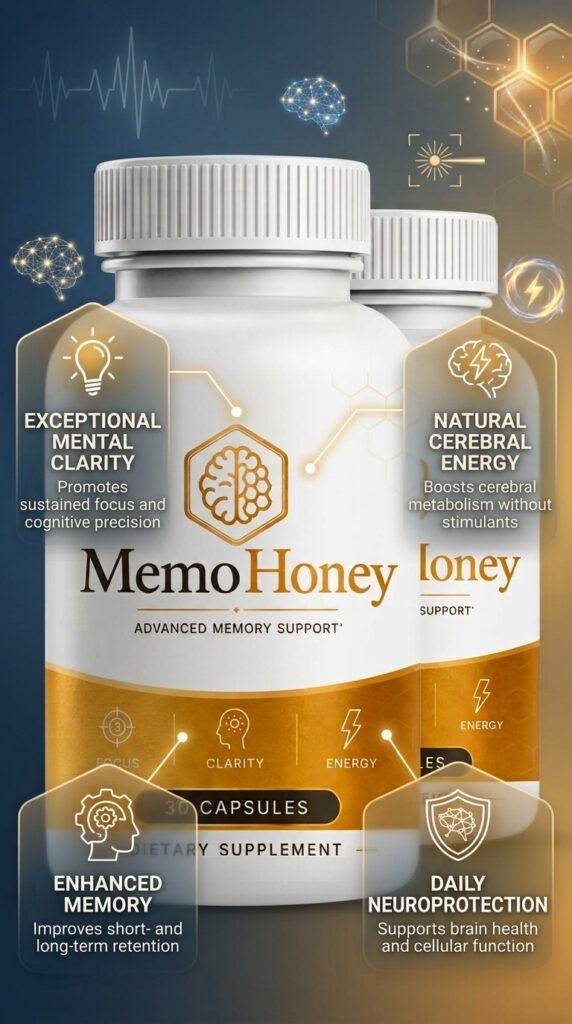
Sustained reading holds together. The point where focus used to come apart stopped arriving. I read long documents in one sitting again.
Interruptions stopped charging a fee. Returning to a task after a call went from a minute of dead time to something I don’t notice. Across a working day, that’s the single largest recovery of time I got.
The afternoon is usable again. Not identical to the morning — but no longer damage control. I’ve moved demanding work back into it.
Fatigue feels like fatigue. I still get tired. I stopped getting foggy. If you’ve experienced both, you don’t need me to explain the difference.
And no cost anywhere else. No jitters, no crash at four o’clock, no interference with my sleep, no stomach trouble in fifty-six consecutive days.
The most accurate way I can summarize it: I got consistent access to the focus I already had. Not a version of myself I’ve never been — the version I am at nine in the morning, available at three in the afternoon.
I hadn’t realized how much of my capacity I’d simply been losing to the clock until I stopped losing it.
MemoHoney Results
After eight weeks, here’s what I’d put my name to.
Sustained reading holds together. The point where focus used to come apart stopped arriving. I read long documents in one sitting again.
Interruptions stopped charging a fee. Returning to a task after a call went from a minute of dead time to something I don’t notice. Across a working day, that’s the single largest recovery of time I got.
The afternoon is usable again. Not identical to the morning — but no longer damage control. I’ve moved demanding work back into it.
Fatigue feels like fatigue. I still get tired. I stopped getting foggy. If you’ve experienced both, you don’t need me to explain the difference.
And no cost anywhere else. No jitters, no crash at four o’clock, no interference with my sleep, no stomach trouble in fifty-six consecutive days.
The most accurate way I can summarize it: I got consistent access to the focus I already had. Not a version of myself I’ve never been — the version I am at nine in the morning, available at three in the afternoon.
I hadn’t realized how much of my capacity I’d simply been losing to the clock until I stopped losing it.
Is MemoHoney Legit or a Scam?
No — and rather than just assert that, here’s the checklist I actually used.
What a scam looks like in this category: a proprietary blend concealing cheap filler; a subscription buried in checkout; claims to reverse cognitive decline; a fake countdown timer; and no realistic route to a refund.
What I found instead:
- Six ingredients, every one disclosed by name. In this aisle that’s rarer than it should be, and it’s the first thing I check.
- No subscription enrolment. I looked specifically. One purchase, one charge.
- A mechanism that holds up. The citrulline-over-arginine bioavailability design is a decision made by someone who understood the pharmacology, not someone buying the cheapest amino acid on a list.
- A 60-day guarantee, honoured through the official site.
- A product that arrived matching its label, with a formula that behaved exactly as a non-stimulant should — no buzz, no crash, no sleep disruption.
- No overreaching claims. It doesn’t promise to fix memory. Products designed to defraud you promise more, not less.
My one real criticism: the milligram amounts aren’t published, and I’d like them to be. I asked and didn’t get a specific figure. You should weigh that.
But I’d rather buy a fully-named six-ingredient formula with undisclosed quantities than a “Proprietary Cognitive Matrix™” where I don’t even know what I’m swallowing. And the practical answer to the dosage question was the eight weeks themselves: it worked, and then I bought it again.
Is MemoHoney Legit or a Scam?
No — and rather than just assert that, here’s the checklist I actually used.
What a scam looks like in this category: a proprietary blend concealing cheap filler; a subscription buried in checkout; claims to reverse cognitive decline; a fake countdown timer; and no realistic route to a refund.
What I found instead:
- Six ingredients, every one disclosed by name. In this aisle that’s rarer than it should be, and it’s the first thing I check.
- No subscription enrolment. I looked specifically. One purchase, one charge.
- A mechanism that holds up. The citrulline-over-arginine bioavailability design is a decision made by someone who understood the pharmacology, not someone buying the cheapest amino acid on a list.
- A 60-day guarantee, honoured through the official site.
- A product that arrived matching its label, with a formula that behaved exactly as a non-stimulant should — no buzz, no crash, no sleep disruption.
- No overreaching claims. It doesn’t promise to fix memory. Products designed to defraud you promise more, not less.
My one real criticism: the milligram amounts aren’t published, and I’d like them to be. I asked and didn’t get a specific figure. You should weigh that.
But I’d rather buy a fully-named six-ingredient formula with undisclosed quantities than a “Proprietary Cognitive Matrix™” where I don’t even know what I’m swallowing. And the practical answer to the dosage question was the eight weeks themselves: it worked, and then I bought it again.
MemoHoney Side Effects
Fifty-six consecutive days. No headache, no stomach upset, no flushing, no change to my sleep, nothing.
That clean run is partly the formula and partly the design: six ingredients instead of twenty means six things that can go wrong instead of twenty, and none of them is a stimulant. Most of the trouble people have with cognitive supplements comes from hidden caffeine and overloaded proprietary blends. Neither exists here.
Two things worth knowing:
Niacin can cause flushing in some people — warmth and redness in the face, harmless but surprising if you’re not expecting it. I never experienced it once, which suggests the niacin here is dosed sensibly rather than aggressively.
Arginine and citrulline gently lower blood pressure. That isn’t a side effect — that’s the mechanism doing its job. For most healthy adults it’s a benefit. If you take cardiovascular medication, it’s the reason to read the next section carefully before you order.
Frequently Asked Questions About Horsefil
What is HorseFil and what is it for?
It’s a once-daily men’s dietary supplement in gummy form, formulated with botanical extracts, amino acids and micronutrients. It was developed to support energy, physical endurance, circulation and overall vitality in adult men as part of a healthy routine. It is not a medication and does not treat any condition.
How long before I see results?
It varies from person to person. Some men report changes after several weeks of consistent use; others need longer or notice little difference. Research on the key botanicals points to 8 to 12 weeks as the realistic window, and early reports generally involve sleep and energy before performance.
Are there side effects?
Generally well tolerated. There may be light digestive discomfort in the first few days and headache in people sensitive to certain botanicals. One published case report documented acute liver injury linked to a Tongkat Ali–containing supplement — an isolated case, possibly from contamination, but mention it to your doctor if you have any liver history.
Can I take it with my medications?
Consult your doctor first, without exception. L-Arginine may interact with antihypertensives and nitrates, and Panax Ginseng with blood thinners and blood sugar management. That conversation takes five minutes and removes the only genuinely relevant risk associated with the product.
Is the packaging discreet?
Yes. Orders ship in plain, unmarked packaging with no product names or descriptive labeling visible from the outside.
What if it doesn't work for me?
You can request a refund within 60 days of purchase by emailing support with “Refund Request” in the subject line and returning all bottles, opened or unopened, to the address in Ogden, Utah. Refunds process within 5 to 10 business days of receipt. Return shipping is the customer’s responsibility.
The 60-Day Guarantee — and Its Timing Problem

The guarantee is 60 days, it’s honoured, and it’s the reason the risk here is asymmetric: you can lose eight weeks. You can’t easily lose the money.
But there’s one thing nobody selling this will point out, and it’s the single most useful sentence on this page.
The mechanism needs about 50 days to declare itself. The refund window closes at 60.
That gives you roughly ten days of margin — enough, but only if you’re deliberate. So:
On the day your order arrives, write the date 50 days out where you’ll see it.
Do that, and the guarantee protects you completely. You’ll reach a real verdict with time in hand, and the decision costs you nothing but consistency.
Drift for three weeks the way most people do with a new bottle, start taking it seriously in month two, and you’ll arrive at your answer after the window has shut — and you’ll have paid for the privilege of never actually finding out.
The guarantee is only as good as your calendar. Mine is the reason I could evaluate this properly instead of hopefully, and it’s the reason I have an answer at all.
MemoHoney Pricing Discount and Bonuses
What I’d tell a friend across the table.
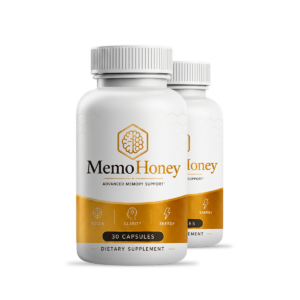
Skip the two-bottle option. Not to push you upward — because it can’t answer the question. The mechanism needs roughly fifty consecutive days, and a 60-day supply leaves you no margin for the mornings you’ll inevitably miss. You’d be paying $158 to run a test that comes back inconclusive.
The three-bottle package is the smallest order that can actually give you an answer. That’s precisely why I chose it: 90 days, free shipping, and 30 days of margin against my own imperfect consistency. It’s also the point where the per-bottle price stops being punishing.
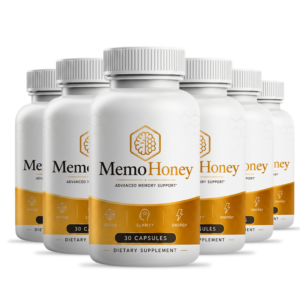
The six-bottle option is the better economics by a wide margin — $49 a bottle against $79 — and if I’d known in June what I know now, that’s what I would have ordered, because I’m still taking it and I’ve now paid the higher price twice. I didn’t order it then because I hadn’t tested the product yet. If that’s where you are, three bottles is the right call.
At $69 a bottle, this comes to a little over two dollars a day — against, in my case, roughly two usable hours back out of every working afternoon. I’ve spent more than that on coffee that bought me forty minutes and cost me the rest of the day.



Conclusion

If you’ve read this far, you’re probably close to where I was in June — tired of paying for bottles that do nothing, and a little more concerned than you let on in conversation.
So here’s what I’d say across a table.
It won’t feel like anything for the first fortnight, and that’s the mechanism rather than a failure. It won’t rewrite your memory — it isn’t built to, and once you understand what nitric oxide actually governs, you’ll stop wanting it to. It won’t make up for bad sleep.
What it did instead was narrower, and worth far more to me than the promises I’d already paid for and thrown away. My afternoons stopped being a worse version of my mornings. Page 41 at half past two, and I hadn’t gone back once. Interruptions stopped charging me a fee. Fatigue went back to being ordinary tiredness instead of fog.
And I’d tell you the criticism too, because a review that only praises isn’t a review: they don’t publish the milligram doses, and I wish they did. I noticed the changes anyway. Then I reordered in week seven with my own money, before writing any of this — which is the most honest thing I can tell you about how much that criticism ultimately weighed.
Here’s the part that’s actually in your hands.
Three bottles is 90 capsules. The guarantee gives you 60 days. The mechanism needs 50.
Use fifty of them, then decide.
That’s the only version of this experiment that produces a real answer — and it’s the one thing nobody can do on your behalf. Fifty mornings, next to the coffee maker, and either your afternoons come back or your money does.
Where to Buy Memohoney

Only through the official MemoHoney website.
That’s not generic advice — it’s specific to this formula. This is a vasodilator. A counterfeit with the wrong compound or the wrong quantity isn’t merely useless; it’s a cardiovascular product of unknown composition. In that category, “probably fine” isn’t a standard I’d accept, and neither should you.
Buying direct is also the only route that keeps the 60-day guarantee intact. Third-party sellers don’t honour it, and the manufacturer has no obl